This winter I had three opportunities to teach fiber arts to kids. Dyeing, weaving, and knitting have all passed through hundreds of generations and teaching these skills to kids is something I do with great care. I believe that we must teach young people to make things with their hands. Creativity is a learned skill and we must teach this with warmth and joy!
In January, I worked with a religious organization’s family weekend retreat. As I had previously worked with this community’s teen retreat on an indigo dyeing project, I proposed a workshop on botanical bundle dyeing; it’s suitable for a wide range of ages. With a meaningfully prepared environment, it is both self-directed and communal. It’s also a beautiful process; it’s an opportunity to work with natural materials, smells great, and has a wow-level reveal at the end of the project.
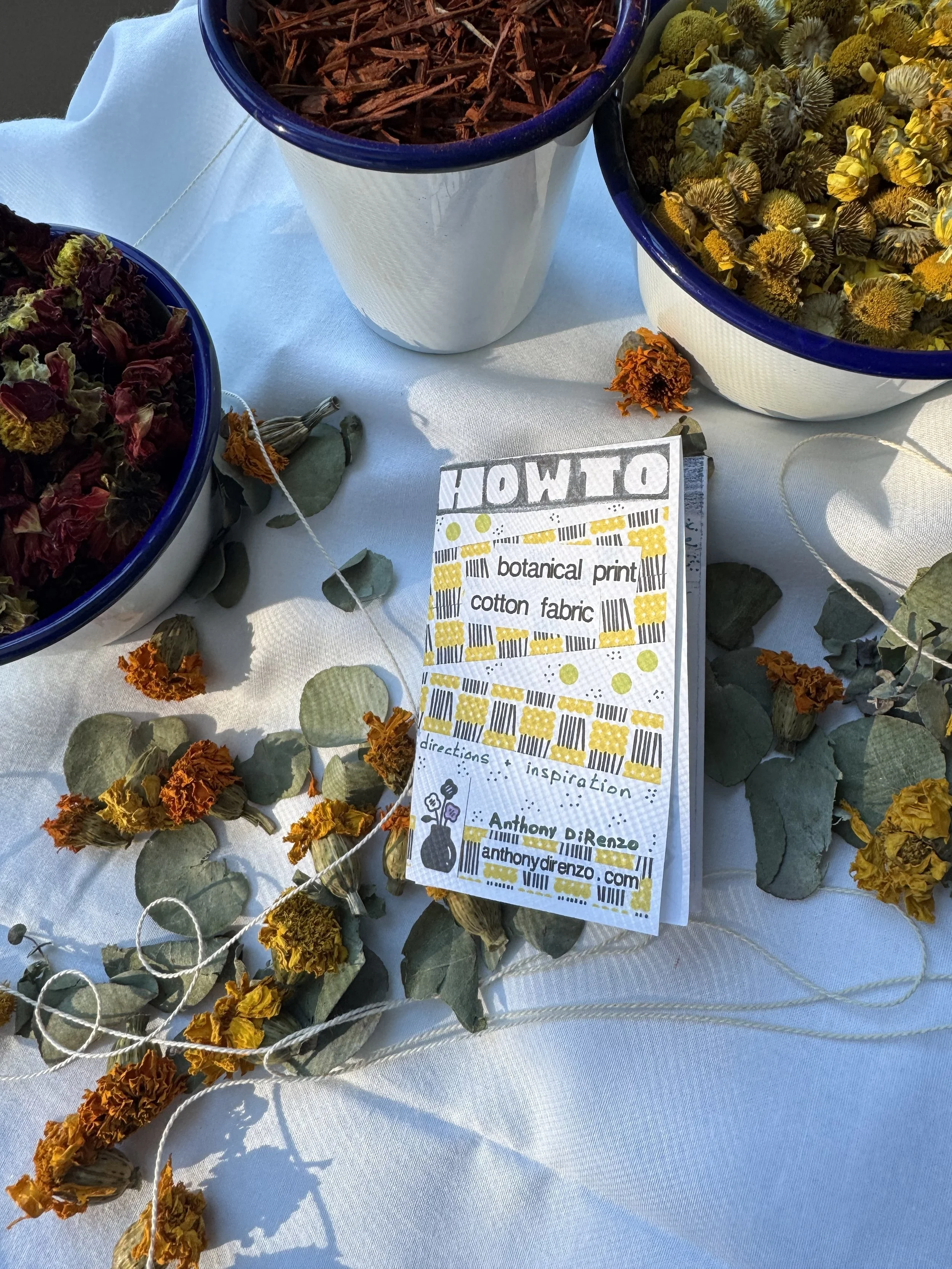
the zine has all of the instructions, inspiration, and directions to reproduce the project at home
Before the workshop began, I scoured and mordanted squares of cotton fabric, created zines to guide the work, gathered and labeled the dye materials, and created a set of visual directions with examples so that families could start their work independently while I circulated and helped others with their projects.
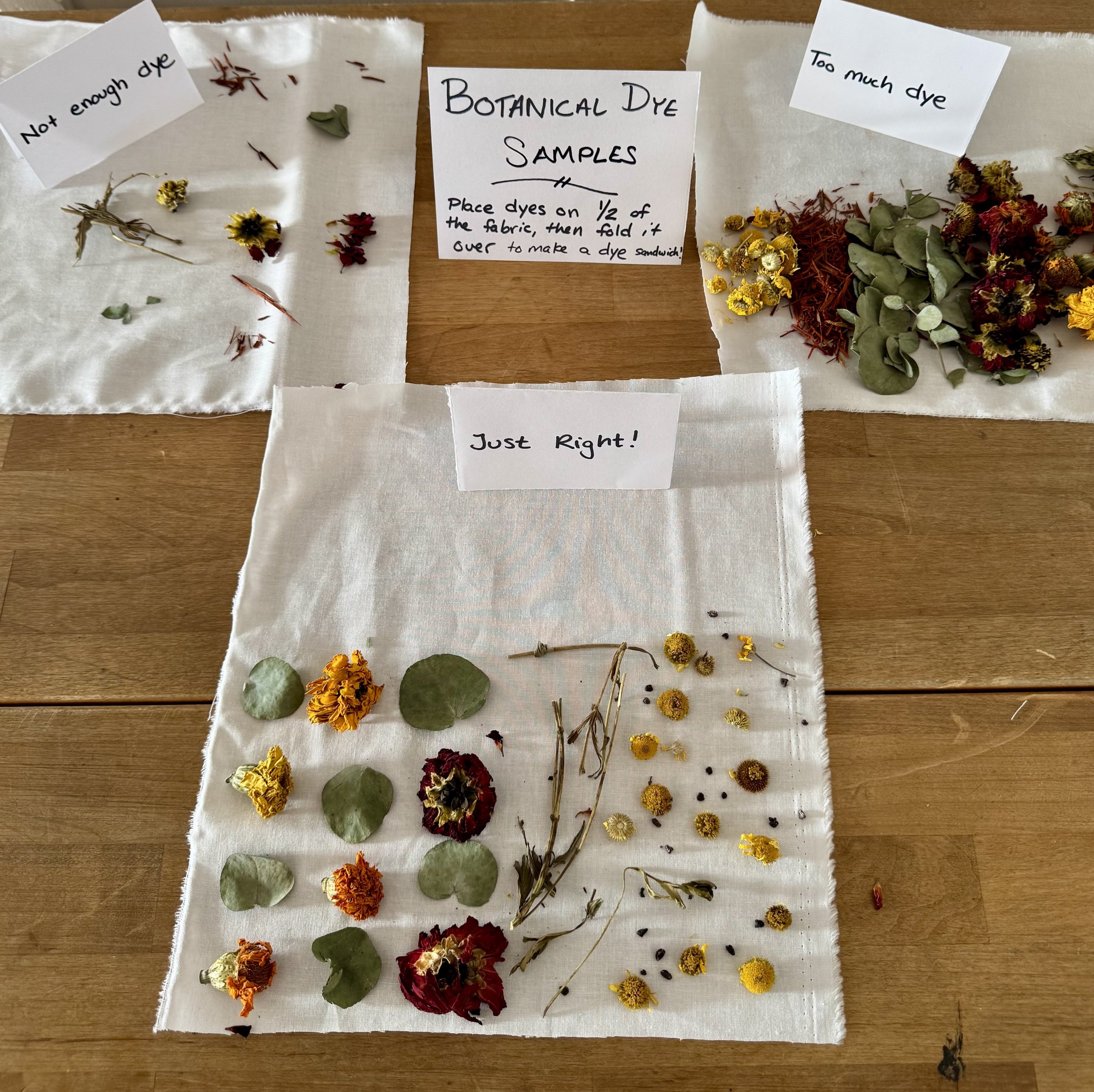
the right amount of dyestuff for a project
The room was abuzz with the hum of productivity. I made sure to check in with everyone about their work, offering suggested changes to those in need and highlighting moments of success when I saw it. The results are a stack of community-dyed colorful fabrics, a physical memory of a meaningful weekend for these families. Now, with my new sewing skills (see my post about Square One sewing classes), my task is to piece these fabrics together into a meaningful final object to be used in their community for many years to come.
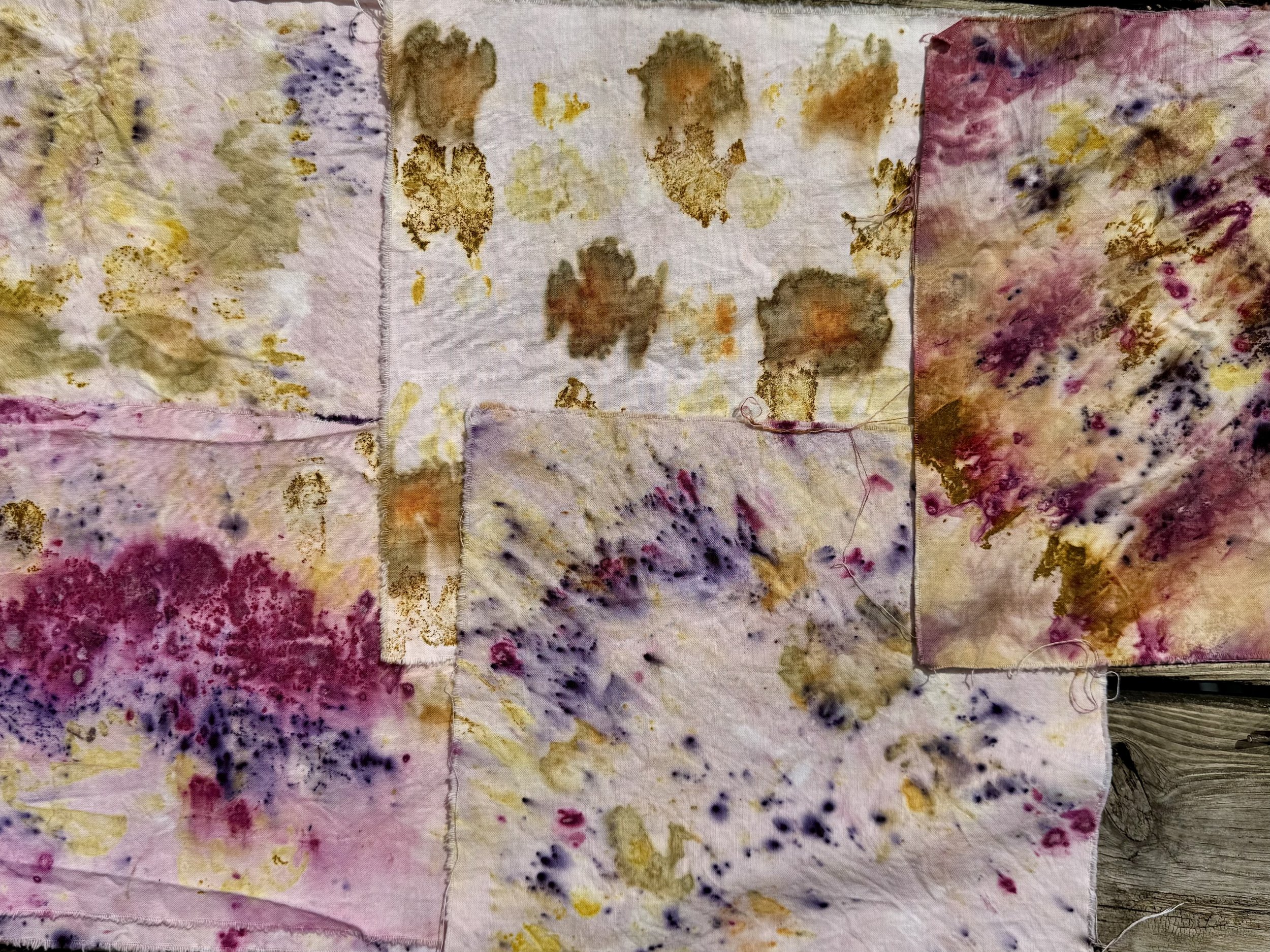
the community’s beautiful botanical-dyed fabrics
In February, a friend was planning her son’s birthday party. He wanted an art themed afternoon with his friends. My friend suggested a weaving station and asked for my help. I said, “say less, Uncle Tony will be there!”
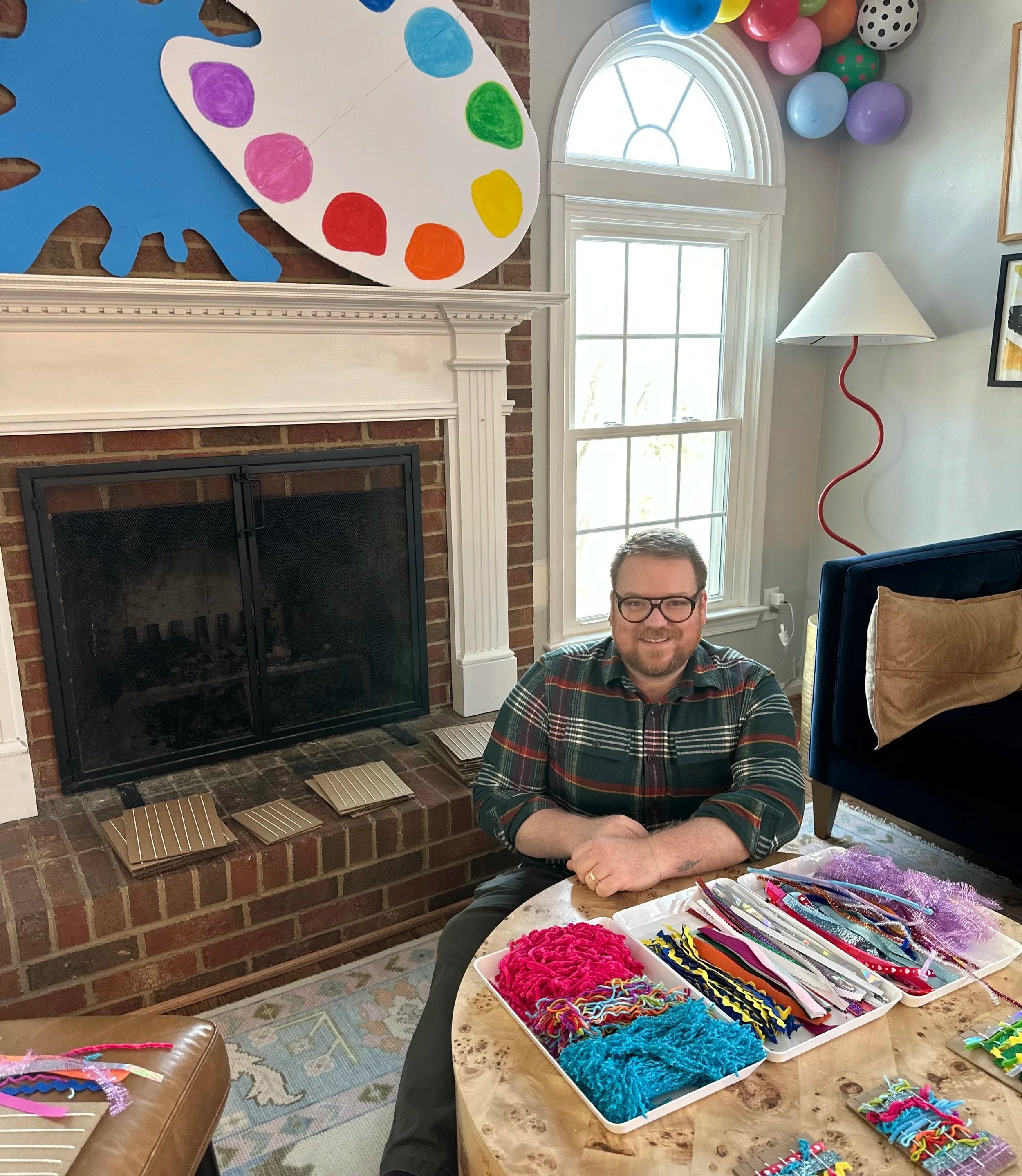
the prepared environment to weave with young folks
My friend is another creative, having worked in fashion (and before that as a world language teacher, just like me!) With three young children in the house, she spends her precious free time sewing gorgeous quilts and turning her living room into an artists’ studio for 30 kindergarteners. We planned a weaving project suitable for her space, the materials on hand, and the motor skills and attention spans of the six-year-old crowd. I prepped dozens of cardboard looms with cotton string as the warp and precut a variety of papers, ribbons, yarns, ric-rac, and other materials for the kids to choose. Here again, we were preparing the environment for success. I wove up three example projects to show the young weavers as they came to my station; sharing examples is a best practice in teaching craft.
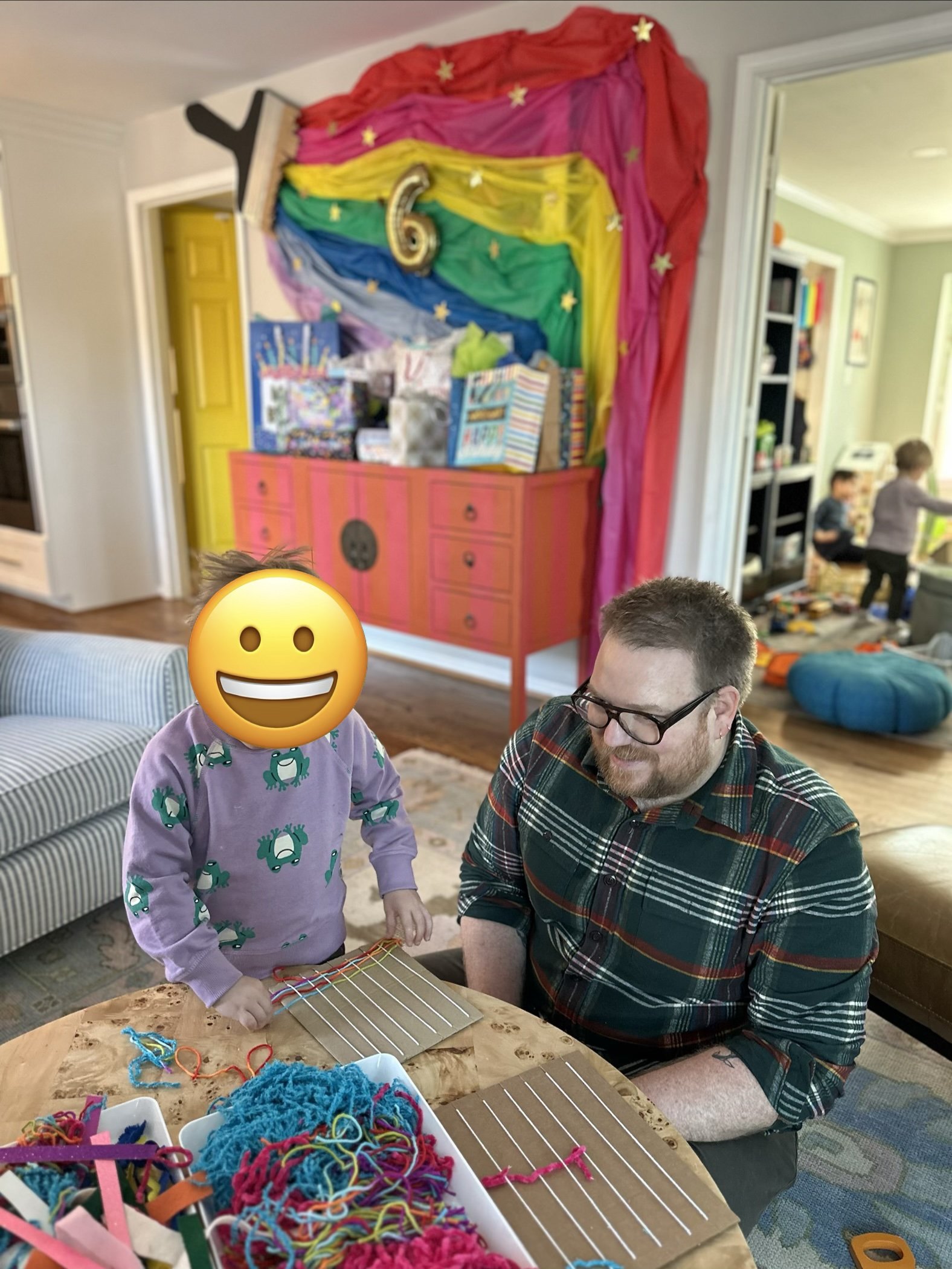
the world’s newest weaver
The party was joyful (and loud- but also joyful!) I met and guided dozens of new weavers that day. After demonstrating a few short instructions, I watched as these kids carefully pulled on their warp string to place their weft materials in their chosen order. Just like adult weavers, some of the kids had a full plan for their work, others chose their materials as they worked through their pieces. Incredibly, many of these kids chose materials in colors that matched their outfits- a phenomenon in weaving workshops first pointed out to me by Denise Kovnat at a summertime class in Deflected Double Weave.
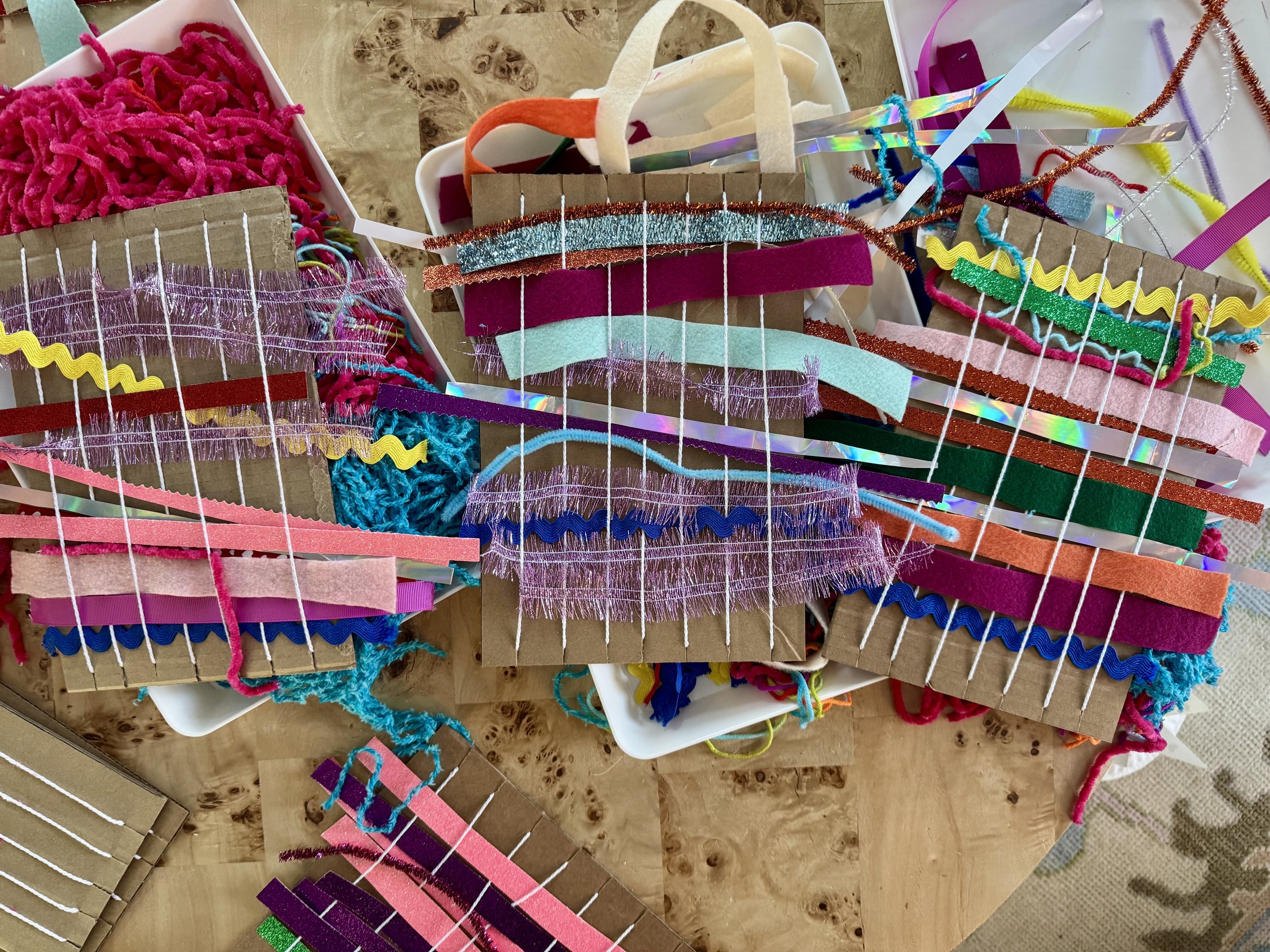
a successful afternoon of weaving with toddlers and children
In the last 4 weeks of the winter, I worked with the Stone Ridge Public Library here in the Hudson Valley to teach a 4-week knitting class for students ages 9-14. I had a great time designing the sessions with the Youth Services Librarian. One of my strongest opinions about teaching crafts is that starting a project is hard. Nobody wants to learn to cast-on for 30 minutes only to be met with another lesson on how to knit. It’s too many new skills at once. I believe new knitters should be taught to knit before being taught to cast-on.
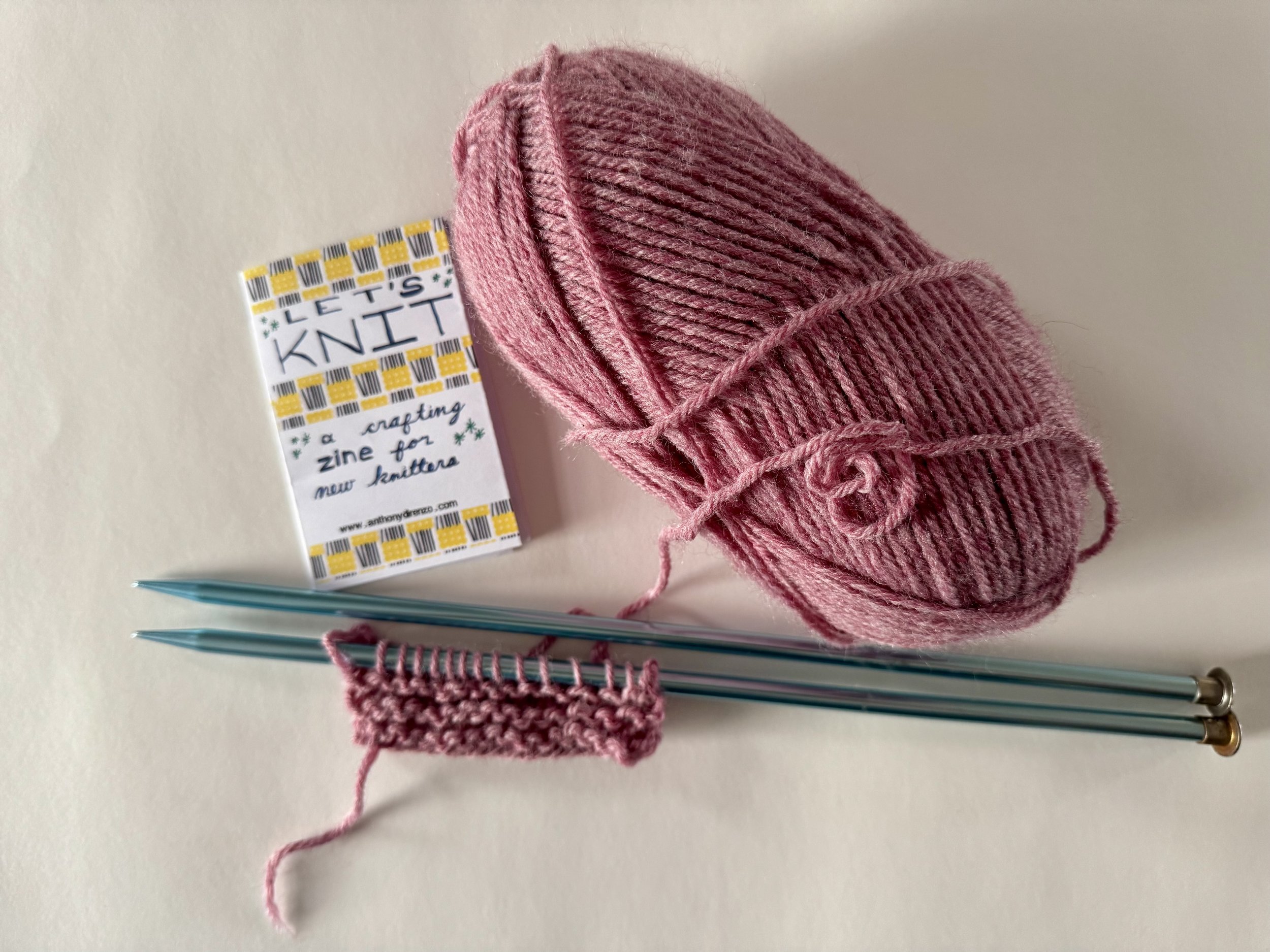
each new knitter started with 15 stitches and 6 rows already on their needles
I went to the library two weeks before the classes started. I wanted to see the space I would be teaching, and I picked up several pairs of knitting needles and a variety of yarns generously donated by the library’s Saturday Knitting Group. In order to prepare this environment, I once again made a zine so that the new knitters could independently continue knitting at home. I also cast on 15 stitches and knit six rows on eight pairs of needles. This ensured that all of the kids who showed up to the class would be ready to start with the knit stitch.
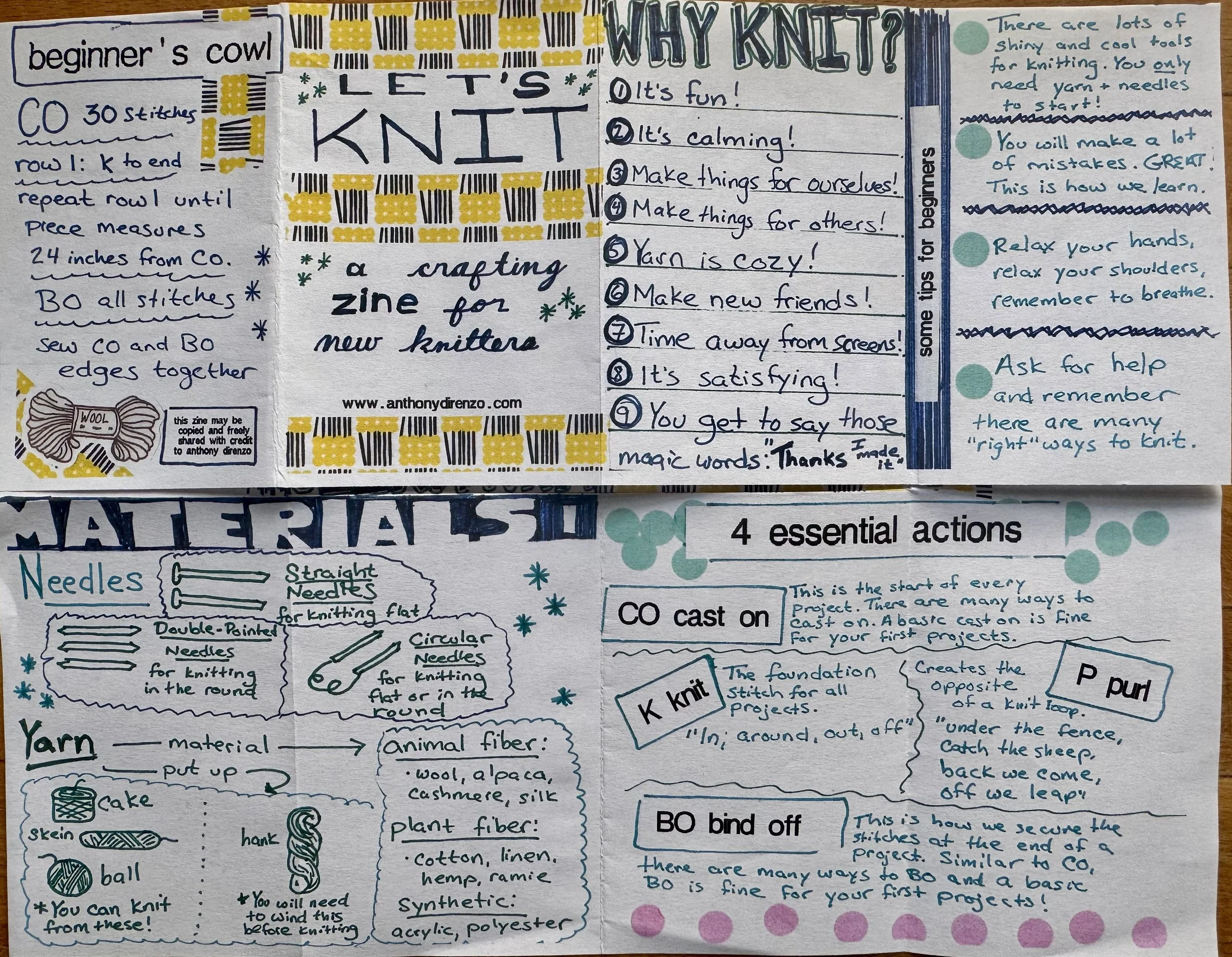
details from the knitting zine I created (contact me for a PDF version)
The knit stitch is 4 separate actions with specific directionality. It’s a lot to learn! But isolating this skill allowed for the students to find success in this first class; many of the new knitters came to the second class having knit quite a bit in the week. In the following three weeks I taught purl stitch, casting on, binding off, and reading basic patterns. I was grateful for the adult knitters in the community who joined the classes to share their wisdom, help with problem solving with our new knitters, and share in the community-building that is crafting together.
What a winter! From dyeing on the family retreat, to weaving at the birthday party, to knitting at the library, I am proud of the work I have done to spread the joy of making fiber art. During these events, these young people were making things with their hands. They were not scrolling, they were not being advertised to, their data was not being mined. They were working together, problem solving, and making something beautiful in a world in desperate need of community.
If you would like to coordinate a workshop or class together, please contact me.
I joyfully work with youths, adults, and everyone in between. I can design a workshop from 2 to 40+ participants.