In October 2025, I submitted a woven scarf to the New York State Sheep and Wool fiber art contest. I used new knowledge from a summertime class on Deflected Double Weave to design this fabric. I had two yarns from FabScrap in Brooklyn: a light blue linen and a navy blue wool which seemed to work well together for this project. Linen and wool shrink differently when washed, which create a slight pucker in the finished fabric. I am delighted with the structure, texture, and color in this project.
My only previous experience with machine sewing was putting hems on handwoven towels. I tried to apply those rudimentary skills to sewing this fabric into an infinity scarf. In retrospect, I was not sure how to best finish deflected double fabric and gave it my best shot on the machine. As I did not know a lot about machine sewing at the time, I didn’t know what I didn’t know. I’d hoped my satisfaction with the fabric would eclipse my shoddy sewing skills.
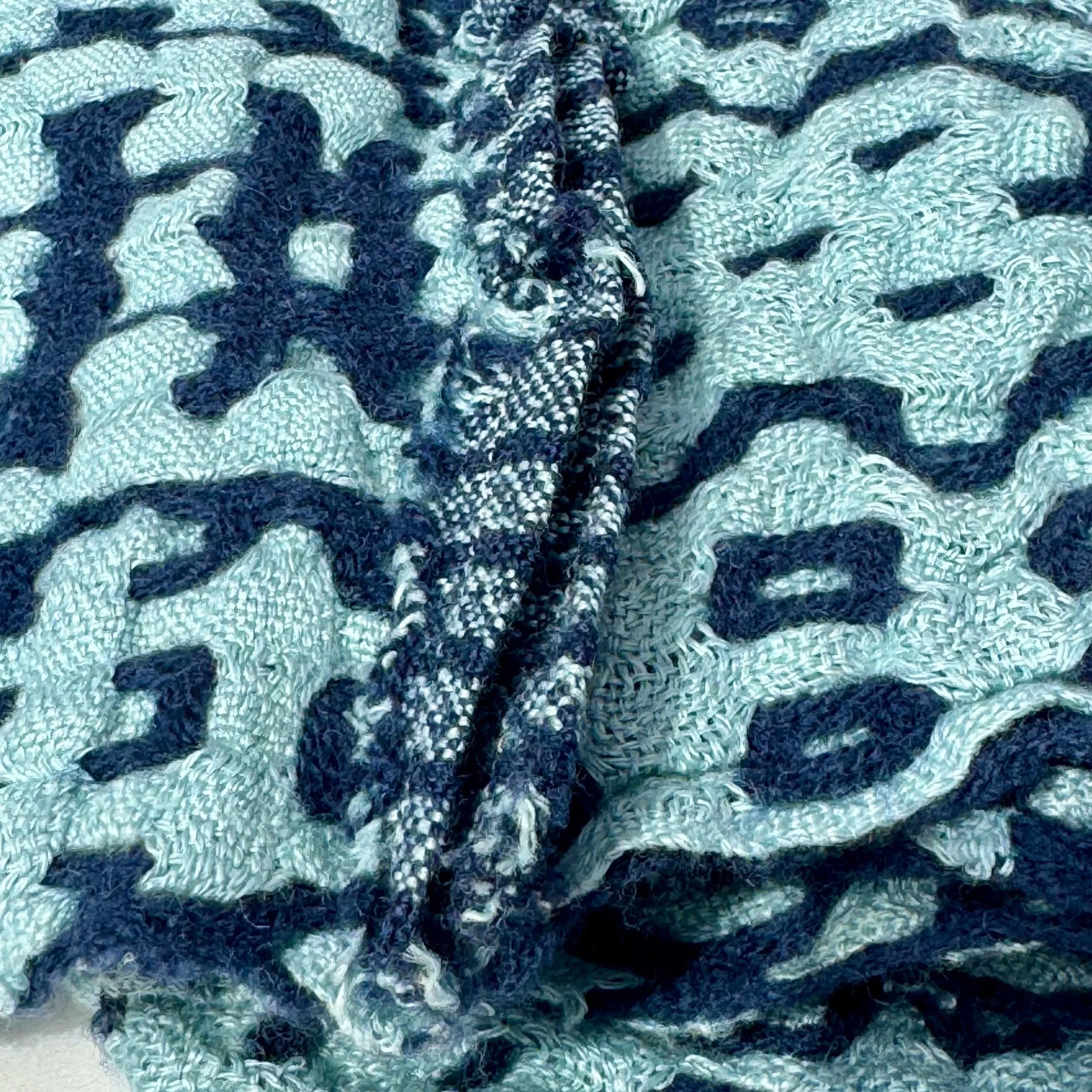
my wayward seam
At Rhinebeck, in the category of handwoven, large, commercially-spun yarn, I received a second-place red ribbon; the competitor in me was disappointed. The judge’s feedback I received on my entry card indicated good color choices but that a different seam would have “elevated finishing.” I did not disagree.
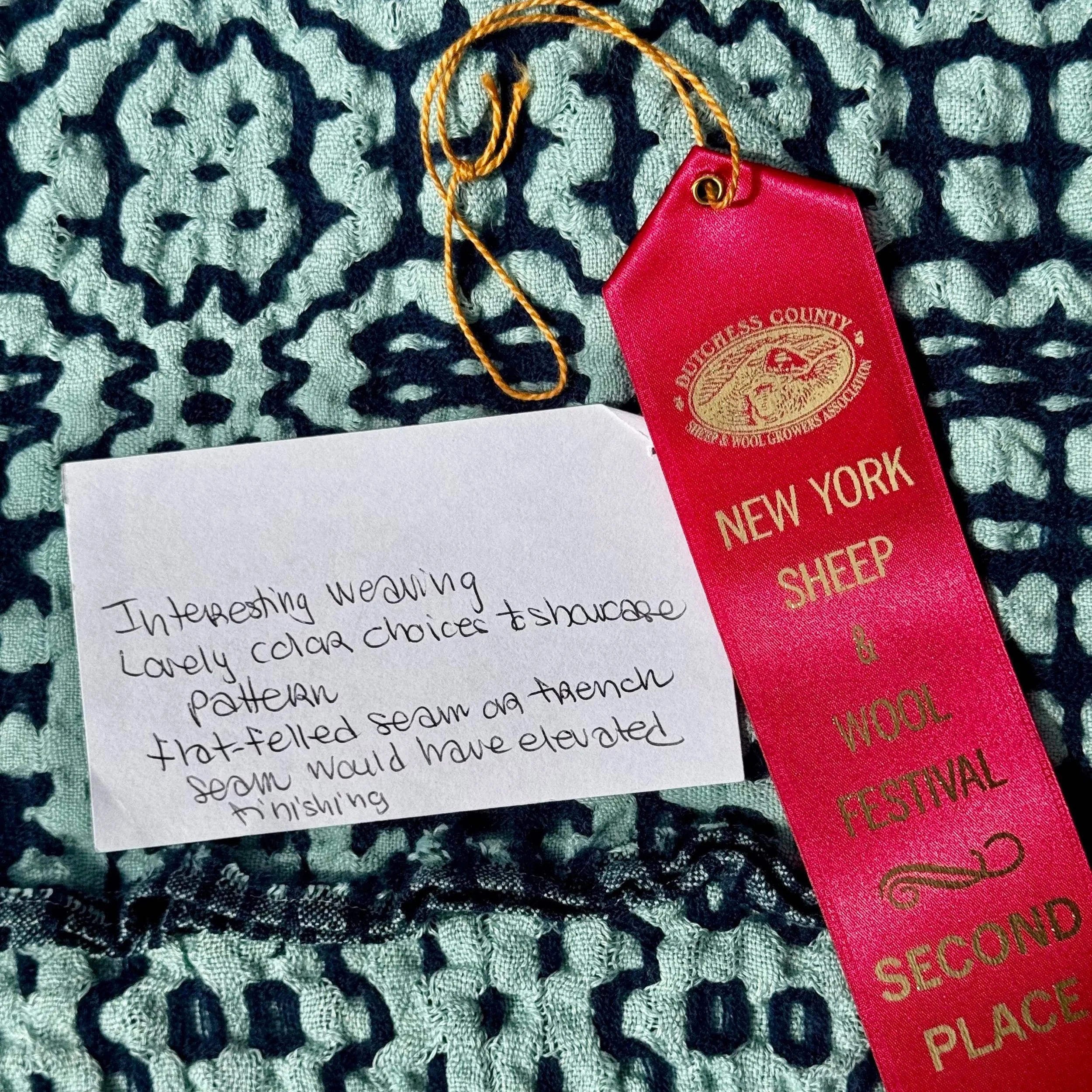
judge’s notes on my entry card
Around that same time, a new fabric shop opened in my neighborhood: Capital Fabric Supply on Broadway in Kingston. I walked in with my entry card with the judge’s remarks and asked the owner, Chelsea Carson, “Do you offer classes? I have to learn French seams and flat seams.” She was getting ready to launch the first round of Square One, the CFS introduction to sewing classes. I signed up for their newsletter and the sign-up link arrived in my inbox a few weeks later.
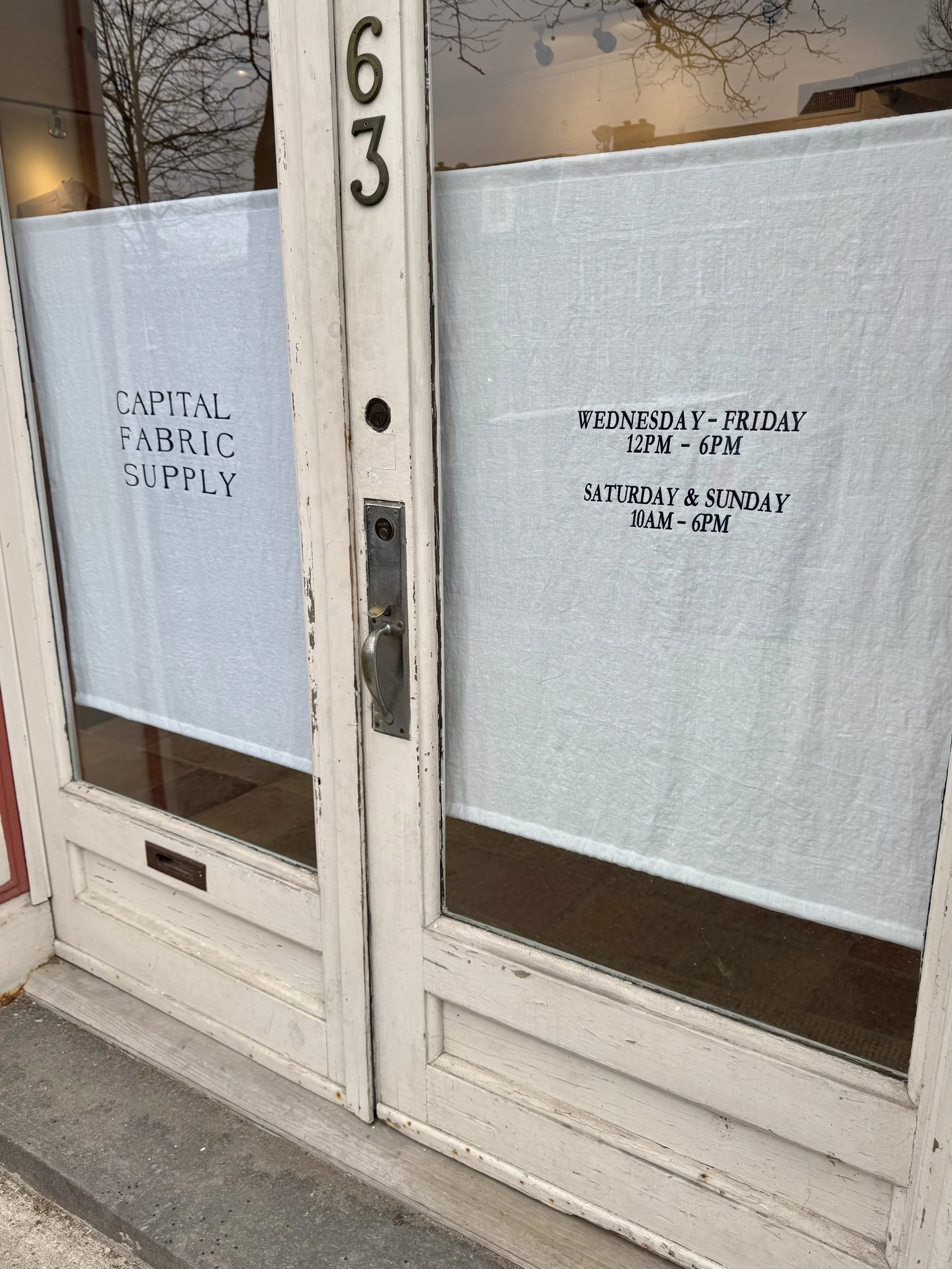
the 63 Broadway storefront of Capital Fabric Supply in Kingston, NY
Over the course of 6 weeks this winter, I was properly introduced to a sewing machine. In addition to learning how to set up my machine for success, I learned about construction, adjusting patterns, facings, piecing, problem solving, and yes- French and flat-felled seams. We sampled these techniques in muslin and later we applied our knowledge to a weekender bag and pajama pants from Chelsea’s pattern company, Daughter Judy. The learning environment at Capital Fabric Supply is filled with excitement; Chelsea and her team have a lot of expertise to share and they bring their students along with warmth and enthusiasm.
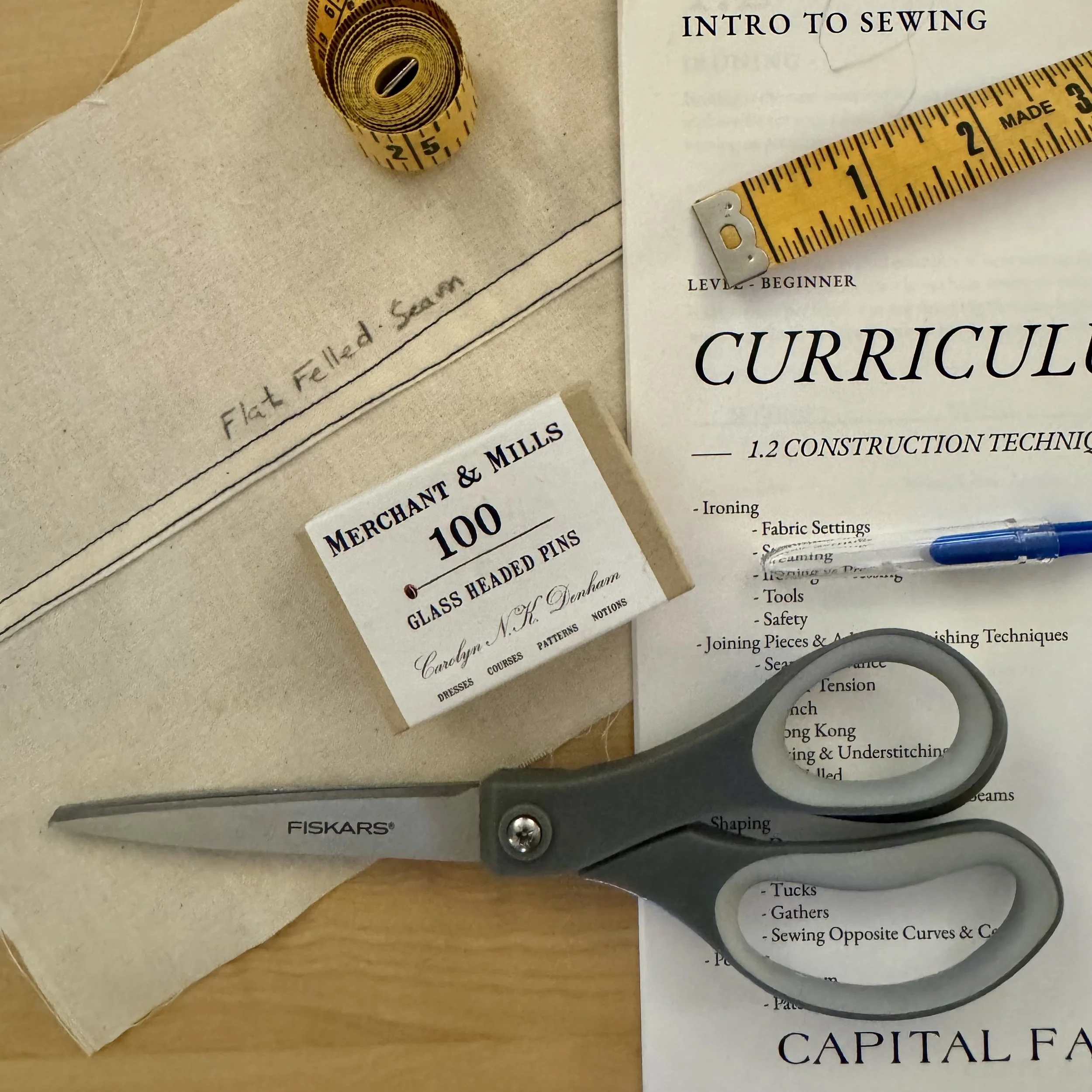
my flat-felled seam sample from Square One at Capital Fabric Supply in Kingston, NY
Now, in March, with my new Square One sewing skills, I reminded myself of the original reason I took the class. I looked at my woven scarf. I grimaced when looking at the seam. It was bad; it was really bad. I chuckled at how the fabric itself showed a sound understanding of weaving and the seam demonstrated quite the opposite in sewing. I ripped out the original junk seam, cut off the plain weave headers, and I prepared the fabric for a flat-felled seam.
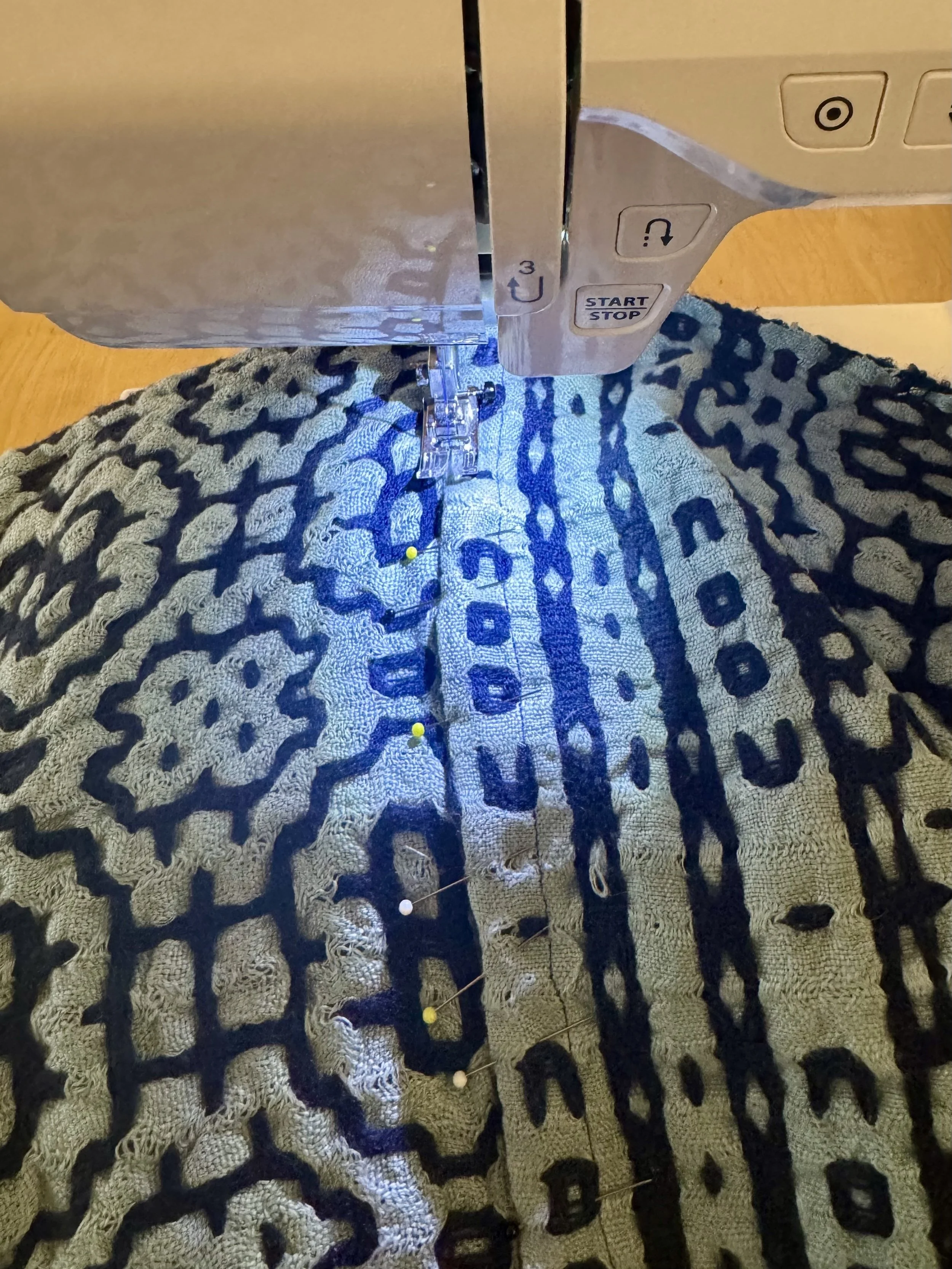
carefully sewing my scarf back together
Handwoven cloth requires more delicate handling. I used many pins to ensure the seam was sewn into the right place. I sewed the first seam, folded and pressed the hem and sewed the second seam. I pressed the whole width of the scarf along the new seam and gave the scarf a fresh mangle (the process of smoothing handwoven linen.)
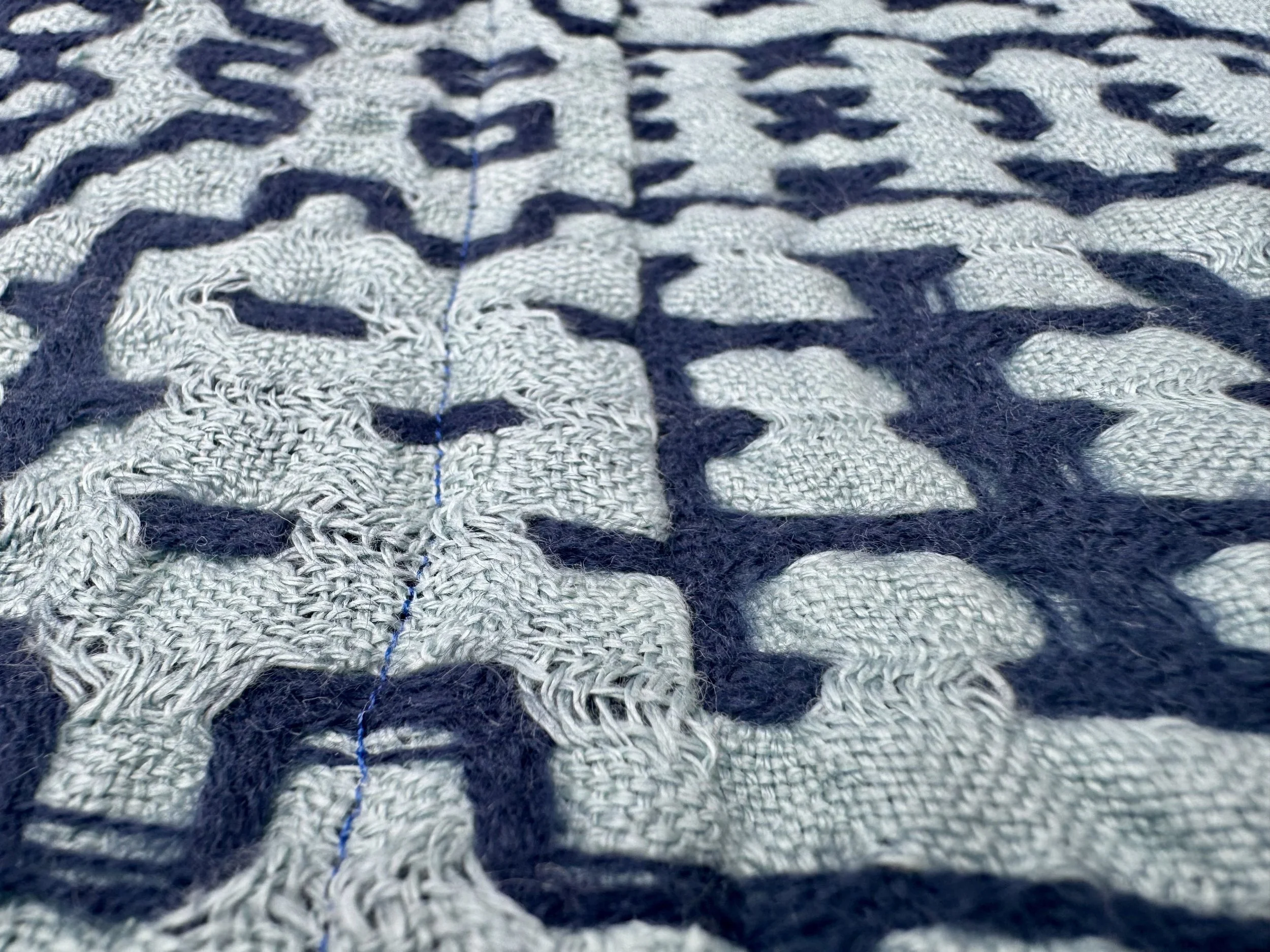
the new seam is clean, it has elevated the whole project
Wow. If those judges could see me now. The flat-felled seam is much more refined looking than the original seam in this scarf. I am proud of my progress, my new knowledge. I am proud that I returned to this scarf and re-sewed a seam that was fit for purpose. And I am grateful for the teachers at Capital Fabric Supply and the judges at the NYS Sheep and Wool Festival for helping me become a better artist.